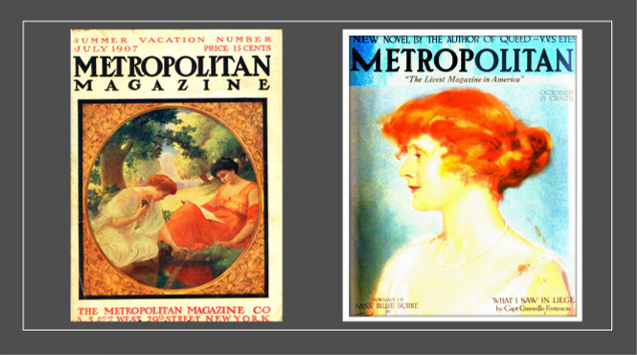

Some very exciting news! The small press La Daga y La Pluma based in Spain, is publishing the earlier (forgotten) magazine stories of Author Earl Derr Biggers written mostly prior to, but definitely aside from his celebrated Baldpate and Charlie Chan successes — in book form!
La Daga y La Pluma translates to, The Dagger and The Quill. A credo on their website proclaims:
“La Daga y la Pluma reopens the pages time had closed, and gives the forgotten back their shine.”

Located on the Mediterranean coast in Benidorm, Spain, La Daga y La Pluma press serves to preserve earlier, significant writings of both celebrated and unknown authors which may have forever gone unnoticed or forgotten. The research they put into vetting out these “forgotten treasures” is extensive as you can see by visiting their website. They research text established from sources and facsimiles of an author’s previous work, page-by-page to produce a single publication that previously did not exist:
“We are not a reprint house — there would be no sense in competing with the free public-domain editions, and we do not try to. What we can offer instead is the work behind the text, which is the part nobody does because it is slow.”
La Daga y Pluma will soon release two volumes under the series title, The Earl Derr Biggers Library:
- GEM OF THE DUST AND FIVE OTHER STORIES: Earl Derr Biggers in the Metropolitan Magazine *1906-1914 (October 30, 2026, $19.99 paperback, $29.99 hardback.)
- LOVE IN HOLLYWOOD WITH A NOVELETTE AND TWO STORIES: Earl Derr Biggers in The Ladies Home Journal *1913-1921 (Release before the end of 2026.)

GEM OF THE DUST And Five Other Stories (Earl Derr Biggers in the Metropolitan magazine, 1906–1914) is out now. Here are some words on that from the publisher:
Between December 1906 and October 1914, Earl Derr Biggers published six pieces of fiction in The Metropolitan Magazine. None has been reprinted since. La Daga y la Pluma is bringing them out together, with the text established from the printed pages themselves — every page read, collated against a second reading, and recorded folio by folio.
The first four belong together. “Reformers Three” (December 1906), “The Duel” (May 1907), “There’s Many a Slip” (July 1907) and “Bread Upon the Waters” (October 1907). They are sailors’ comedies with a crew that keeps turning up aboard different ships, and written during Biggers’ last college years and the months just after, learning his trade in public. That they were meant as a series is not a guess: a trade note in “The Writer” for 1907 says so, and promises more.
“Reformers Three” is the first story Biggers ever sold. He wrote it for a Harvard Advocate contest and won — the prize was a volume of Shelley — and then, instead of letting the Advocate print it, sent it out for a wider audience. Two weeks later he was told it had sold for twenty-five dollars. He was still an undergraduate.
“The Bluebottle Dividends” (January 1913) is the one I would put in a reader’s hand first. Biggers had published nothing in the magazine for five years, and he came back with a story that is simply good — no apprentice work about it. The timing is worth a glance too: the issue was on sale in December 1912, and Seven Keys to Baldpate came out on February 15, 1913.
The last of the six is the longest: “Gem of the Dust,” a serial in four parts, July to October 1914 editions of the magazine. It is also the one that left a trace of trouble behind it. A house notice on page 69 of the August issue tells readers the story “is concluded in the September issue.” It was not. The September installment ends and a fourth follows in October. Whether the copy came in late or the magazine ran out of room, the magazine announced an ending it did not deliver.
Publisher Esaú Manrique Gavilán says this first edition is the original English: the text set as the magazine set it, down to the sailors’ dialect with only necessary corrections to printing errors, which are listed at the end of each story. They eventually intend to bring the book out in Spanish, French, German, Italian and Portuguese.
Of special interest to scholarly researchers and bibliophiles are the Appendices:
- Appendix A: The Pieces, Entire. Everything in a nutshell here, a census of each story: title (as printed), byline (as printed), magazine (as on the masthead), volume and number, date, pages, folio read.
- Appendix B: Chronology. Nine appearances, December 1906 to October 1914. Every date, volume, and number as read on the masthead of the issue itself.
- Appendix C – Index of Names. Names are given as the magazine set them. Where it set a name more than one way, every form is here and none has been preferred over the others. Where two pieces give the same name to different people, the entries stay apart. People are entered under the surname, places and titles under their first word.
Earl Derr Biggers is just one of many significant people whose site La Daga y La Pluma lists: Émile Gaboriau, Gaston Leroux, Arthur Conan Doyle, and E. W. Hornung are among others you’ll find on their website under the Authors link. And under Earl Derr Biggers you’ll find this fitting quote:
“Charlie Chan saved his name and buried him with the same gesture.”
Postscript. La Daga y La Pluma publisher is presently collecting Biggers works inside The Red Book Magazine for publication. They intend to continue The Earl Derr Biggers Library with releases containing his writings inside: Collier’s, The American Magazine, The Saturday Evening Post and more.
“Life would be a dreary waste, if there was no thing called loyalty”
(The Chinese Parrot, 1926, Chapter 2)

